
Why Your Business Can’t Afford to Ignore IT Asset Management Software
Every time an employee leaves a company with an unreturned laptop, or an unused SaaS subscription silently auto-renews for another year, money evaporates. Multiply those small leaks across hundreds of endpoints, remote workers, cloud instances, and software licenses, and the financial drain becomes alarming.
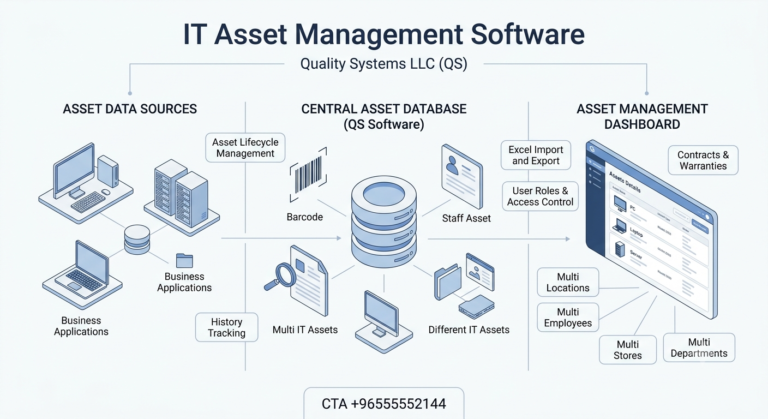
Managing technology hardware and software on spreadsheets is no longer viable. Modern environments are distributed, hybrid, and constantly shifting. That is why organizations rely on IT Asset Management Software—a centralized system designed to track, govern, and optimize every technology asset across its entire lifecycle.
Here is a practical look at what modern IT Asset Management (ITAM) software does, why it matters, and how to choose the right solution for your organization.
What Is IT Asset Management Software?
At its core, IT Asset Management Software provides a single source of truth for an organization’s technology infrastructure. It continuously tracks both physical hardware (laptops, servers, routers, mobile devices) and digital assets (software licenses, SaaS subscriptions, cloud resources, virtual machines).
Rather than acting as a static inventory list, an ITAM system tracks assets dynamically from request and procurement through deployment, maintenance, and eventual secure retirement.
Procurement ➔ Deployment ➔ Maintenance & Compliance ➔ Retirement & Disposal
By linking asset data directly to user assignments, cost centers, software license agreements, and maintenance schedules, ITAM software bridges the gap between IT operations, procurement, and finance.
Core Capabilities of Modern IT Asset Management Platforms
Not all ITAM solutions are built the same. While basic tools focus solely on inventory tagging, modern enterprise platforms deliver deep automation and discovery capabilities across four core pillars:
1. Automated Hardware Discovery and Inventory
Manual asset audits are notoriously inaccurate and time-consuming. Modern ITAM software uses network discovery agents and agentless scanning to map everything connected to your network automatically.
- Tracks device specs, serial numbers, operational health, and physical locations.
- Flags “ghost assets”—equipment that appears on financial ledgers but has physically vanished or broken down.
- Leverages barcode or RFID scanning integration for seamless warehouse and office audits.
2. Software Asset Management (SAM) and License Compliance
Software vendors frequently conduct audits, and non-compliance penalties can reach six or seven figures. SAM features within ITAM software help avoid unexpected fines:
- Monitors actual software utilization to identify over-licensed applications that can be downgraded or cancelled.
- Ensures compliance with complex licensing models (per-user, per-core, device-based).
- Tracks contract expiration dates and auto-renewal terms to prevent unwanted charges.
3. SaaS and Cloud Asset Governance
Shadow IT—employees signing up for unapproved cloud apps or spinning up unmonitored cloud instances—is a growing risk factor. ITAM tools now extend beyond on-premise hardware to bring visibility to cloud infrastructure:
- Uncovers active SaaS subscriptions across departments.
- Tracks cloud instance usage (AWS, Azure, GCP) to flag idle compute resources or unattached storage volumes.
- Eliminates redundant application purchases across different business units.
4. ITSM and Security Tool Integration
IT asset data is most valuable when integrated with existing IT Service Management (ITSM) systems:
- Service Desk Integration: Helps helpdesk agents view a user’s hardware and software specs immediately when a support ticket is opened.
- Security & Vulnerability Management: Allows security teams to cross-reference unpatched OS versions or unapproved software installs against active inventory.
Primary Benefits: The ROI of ITAM Software
Investing in dedicated IT Asset Management Software yields measurable returns across cost savings, risk mitigation, and operational efficiency.
| Area | Traditional Spreadsheet Approach | Modern ITAM Software |
|---|---|---|
| Inventory Accuracy | Prone to human error, quickly outdated | Real-time automated network discovery |
| Software Audits | Reactive, chaotic, high risk of fines | Proactive compliance monitoring and audit defense |
| Asset Offboarding | Equipment often lost or unrecovered | Automated offboarding workflows and hardware tracking |
| Cost Optimization | Blind renewals and idle licenses | Usage-based license recycling and cloud waste elimination |
Driving Down Technology Costs
Organizations often spend 10% to 30% more on software licenses and cloud instances than they actually use. By continuously monitoring real usage patterns, ITAM software allows IT teams to harvest unused software licenses and reallocate them to new hires instead of buying new ones.
Strengthening Cyber Hygiene
You cannot secure what you cannot see. Unmanaged devices (un-agented laptops, old test servers, forgotten IoT hardware) represent prime entry points for security breaches. Continuous discovery ensures every device connecting to your network is logged, compliant, and running required security agents.
4 Essential Steps to Implement IT Asset Management Software
To extract maximum value from your ITAM deployment, follow a structured rollout plan:
- Define What Constitutes an Asset: Establish clear guidelines for what needs tracking. Will you track monitors and peripheral cables, or strictly devices with IP addresses, serial numbers, or monetary values above a specific threshold?
- Standardize Naming and Tagging Conventions: Establish consistent naming rules, cost-center tags, and lifecycle statuses (Procured, Deployed, In Repair, Retired).
- Automate Discovery First: Prioritize automated scanning over manual data entry to establish an accurate baseline inventory quickly.
- Integrate with HR and Service Management Systems: Connect your ITAM software with your HR platform (to automate onboarding and offboarding asset workflows) and your IT helpdesk (to track ticket histories against specific assets).
Selecting the Right IT Asset Management Software
When evaluating vendors, look beyond basic feature checklists. Prioritize solutions that scale effortlessly with your organization, offer out-of-the-box integrations with your existing tech stack, and provide intuitive dashboards for both technical teams and finance executives.
A well-implemented ITAM solution does more than track laptops—it turns technical infrastructure into an organized, cost-effective, and secure foundation for your business.