
Invoice Data Extraction Services
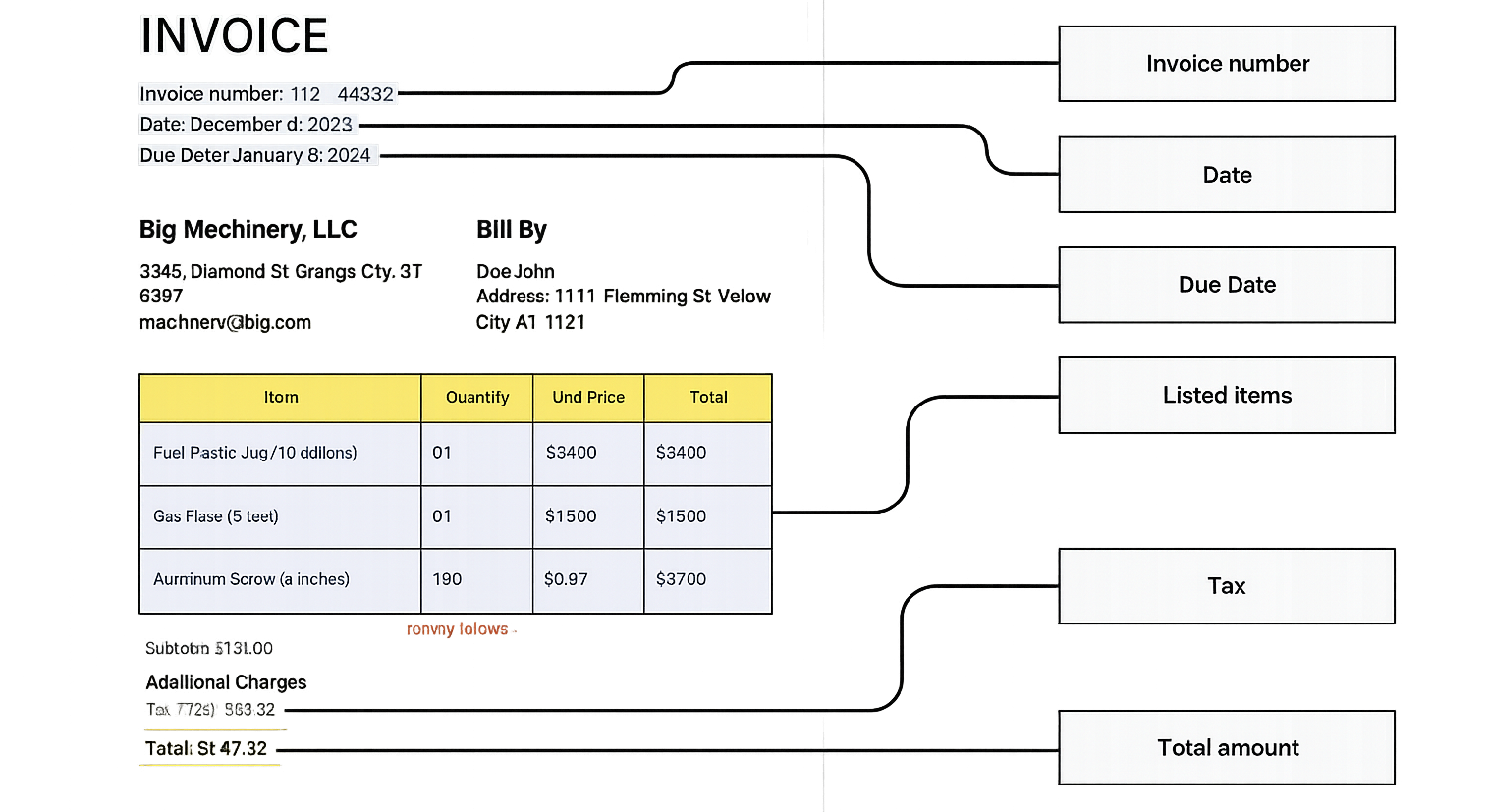
Modern organizations generate thousands — sometimes millions — of invoices over time. Each document contains critical financial data: invoice number, date, due date, supplier information, listed items, tax, and total amount.
When these invoices remain stored as PDFs, scanned images, or archived files without structured extraction, financial visibility becomes limited and operational efficiency declines.
Invoice Data Extraction Services transform invoice documents into structured, validated, searchable financial data.
What Is Invoice Data Extraction?
Invoice Data Extraction is the process of identifying, capturing, and structuring key financial fields from invoices — whether scanned, digital, or archived — and converting them into organized data ready for financial systems.
Typical extracted fields include:
- Invoice Number
- Invoice Date
- Due Date
- Supplier Name
- Line Items (Description, Quantity, Unit Price)
- Tax / VAT
- Subtotal
- Total Amount
The result is a structured dataset that can be integrated with ERP, accounting, or reporting systems.
Invoice Data Extraction Services | Structured Processing for High-Volume & Enterprise Invoices
Why This Matters
In finance departments, invoice processing directly impacts:
- Payment cycles
- Vendor relationships
- Cash flow forecasting
- Audit readiness
- Compliance accuracy
Manual entry is slow, inconsistent,and error-prone — especially when handling high volumes.
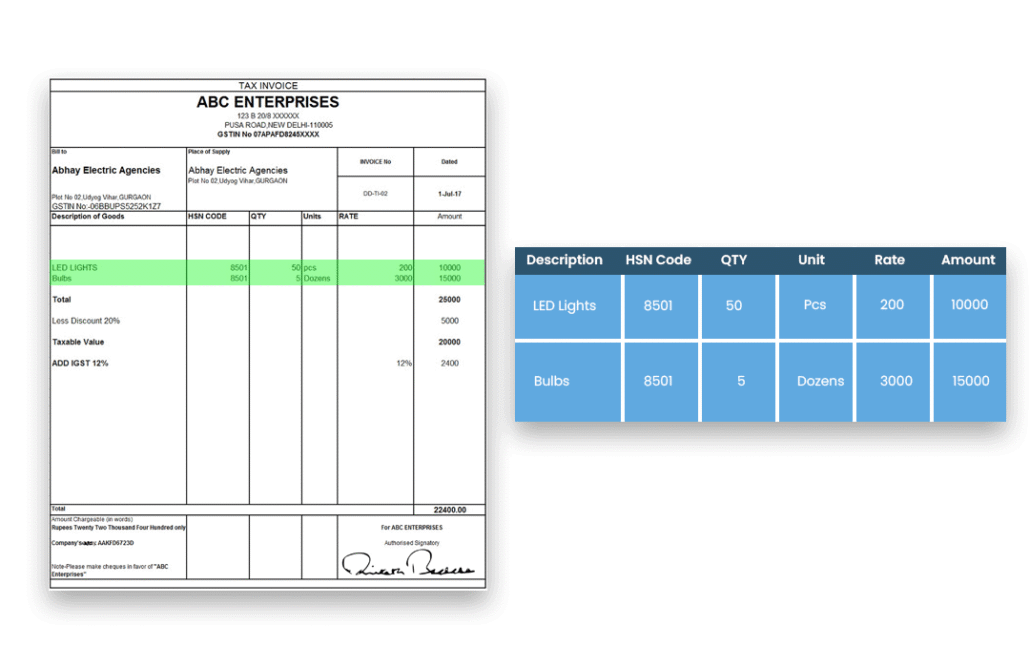
Structured extraction reduces:
- Human data entry time
- Processing delays
- Duplicate payments
- Data inconsistencies
Handling Accumulated Backlogs
Many organizations approach us with:
- Years of archived invoices
- Boxes of scanned PDFs
- Mixed formats (paper + digital)
- Shared folders containing hundreds of thousands of files
Backlog scenarios require a different strategy than daily invoice processing.
Our Approach to Large Backlogs:
- Archive Assessment
Classification by format, supplier type, and structure. - Segmentation Strategy
Separating structured templates from mixed or irregular formats. - Batch Processing Framework
Organized bulk extraction in controlled stages. - Validation & Quality Control
Sampling verification and reconciliation against totals. - Structured Data Delivery
Export in clean Excel or direct system integration.
Managing Millions of Invoices
Processing millions of documents is not simply a scaling issue — it requires operational architecture.
Key considerations include:
- Storage organization and indexing
- Controlled batch processing
- Data validation layers
- Deduplication controls
- Structured export pipelines
- Audit trail documentation
For very large volumes, the process is staged:
- Phase 1: High-value or recent invoices
- Phase 2: Historical archive
- Phase 3: Ongoing operational flow
This prevents disruption to finance teams while clearing historical accumulation.
Operational Benefits
Organizations that implement structured invoice extraction achieve:
- Reduced processing time per invoice
- Improved financial accuracy
- Faster payment cycles
- Reduced backlog accumulation
- Better audit preparation
- Improved vendor reconciliation
Enterprise-Level Considerations
For large enterprises, additional controls are essential:
- User access controls
- Data encryption policies
- Structured naming conventions
- Vendor master alignment
- Duplicate detection controls
- Exception handling workflows
These ensure that invoice extraction is not just automated — but governed.
GET IN TOUCH